
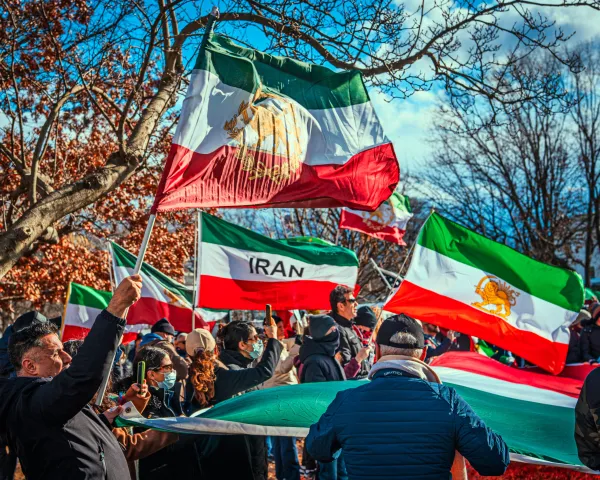
For decades, Iranian opposition movements and their Western backers have relied on a familiar toolkit to induce political change: economic sanctions, diplomatic isolation, information campaigns, assassinations, and at times military confrontation. From a critical perspective, these instruments are not simply failed democratization tools; rather, they can also be understood as instruments of coercive geopolitical power that often impose significant costs on civilian populations while simultaneously reinforcing authoritarian states through external threat narratives and internal securitization dynamics.
Yet the historical record suggests that these strategies have consistently failed to produce their intended outcome—the collapse or meaningful transformation of the Islamic Republic. In many cases, they have produced the opposite effect. A realist reassessment is therefore necessary, grounded not in normative aspirations but in observable outcomes and structural constraints.
Economic sanctions have been among the most persistent instruments used against Iran, particularly by the United States. While they have imposed significant costs on the Iranian economy, they have not led to regime collapse or substantial political liberalization. Instead, the state has adapted. The Iranian regime can be understood as a class formation embedded in a post-revolutionary theocracy-military structure, centered on the clerical establishment, the Islamic Revolutionary Guard Corps (IRGC) and bazar bourgeois, which together constitute key nodes in the distribution of economic and coercive power.
Sanctions have fostered black-market networks, strengthened patronage systems, and increased state control over key economic resources. External pressure has also enabled the leadership to frame internal dissent as foreign subversion, thereby justifying repression and reinforcing internal cohesion.
Diplomatic isolation has followed a similar trajectory. Rather than weakening the regime’s legitimacy, it has often reinforced its ideological narrative of resistance against external domination. This posture has helped sustain support among core constituencies, particularly those who benefit from or are ideologically aligned with the system. At the same time, isolation has reduced opportunities for gradual change through engagement, limiting exposure to alternative political and economic models.
Information strategies—ranging from international broadcasting to diaspora-driven social media activism—have succeeded in exposing corruption and human rights abuses. However, their impact on political change has been limited. The regime has invested heavily in censorship, surveillance, and counter-propaganda, while opposition movements have struggled to translate awareness into coordinated, sustained political action. Information alone rarely produces systemic change in highly controlled environments without organizational capacity on the ground.
More coercive strategies have proven even less effective. Assassination campaigns carried out by groups such as the Mujahedin-e Khalq (MEK) in early 1980s and 1990s failed to destabilize the Islamic Republic in any meaningful sense. Instead, they contributed to the consolidation of a securitized state. Political violence allowed the leadership to frame dissent as an existential threat, justifying the expansion of internal security institutions and intensifying repression. This securitization had profound societal consequences. Surveillance expanded, political space narrowed, and repression became more systematic. The boundary between armed opposition and peaceful dissent blurred in official discourse, enabling the state to criminalize a broad spectrum of political behavior.
External military pressure has produced similar outcomes. The Iran–Iraq War did not fracture the Islamic Republic; it reinforced its revolutionary identity and strengthened coercive institutions such as the Islamic Revolutionary Guard Corps (IRGC), which emerged as a central pillar of the political system.
More recent events illustrate the same structural dynamic with unusual clarity. In early 2026, the United States–Israel conflict with Iran escalated after the United States and Israel launched a large-scale coordinated military operation targeting Iran’s nuclear infrastructure, military assets, and senior leadership. Critics interpret the operation as a form of imperial escalation aimed at reshaping regional power dynamics through military coercion and regime change. The initial wave of strikes killed the supreme leader Ali Khamenei along with numerous high-ranking political and security officials, in what appeared to be a direct attempt at leadership decapitation and regime destabilization.
From a coercive strategy perspective, this represented one of the most extreme applications of external pressure: simultaneous military degradation and removal of the regime’s central authority. Many observers expected this to trigger systemic collapse or at least significant internal fragmentation.
However, the outcome did not align with those expectations. Rather than disintegrating, the Iranian political system demonstrated institutional resilience. Authority was rapidly reconstituted through overlapping clerical, bureaucratic, and security structures, while the Islamic Revolutionary Guard Corps and allied networks assumed a more central role in maintaining continuity.
Crucially, instead of producing moderation or opening space for reformist actors, the crisis strengthened more ideologically rigid and security-oriented factions. Under conditions of acute external threat, actors prioritizing regime survival gained a decisive advantage over those associated with pragmatism or gradual reform. The removal of top leadership did not create a vacuum for liberalization; it intensified competition within a securitized elite environment, in which hardline elements were structurally better positioned to prevail.
At the same time, the conflict reinforced the regime’s long-standing narrative of existential confrontation with Western imperialism. This framing had significant domestic consequences, narrowing the already limited space for dissent, as political opposition could more easily be portrayed—intentionally or otherwise—as aligned with foreign aggression. In this context, coercive institutions gained additional justification to expand surveillance, repression, and internal control. While the long-term effects of the conflict remain uncertain, its immediate political consequences reinforce a recurring pattern observed in earlier cases.
Taken together, these patterns highlight a central realist insight: regimes do not fall simply because they are weakened; they fall when internal power structures fracture in ways that cannot be contained. In Iran, external pressure has consistently failed to produce such fractures and has often encouraged elite cohesion instead.
A realist strategy for political change would therefore shift focus from external pressure to internal dynamics. This does not imply abandoning international influence, but recalibrating it to avoid reinforcing the regime’s defensive posture.
One priority is the gradual erosion of regime loyalty among key constituencies, particularly within bureaucratic and economic systems. This requires more targeted approaches that differentiate between the leadership and the broader population. When external pressure disproportionately harms ordinary citizens, it strengthens the regime’s ability to deflect blame. More selective pressure—combined with incentives for defection or non-cooperation—may alter internal cost-benefit calculations.
Another critical dimension is organizational capacity within Iranian society. Spontaneous protests have repeatedly failed to produce lasting change due to weak coordination, leadership, and institutional continuity. A realist approach emphasizes the slow development of networks, trust, and durable structures capable of sustaining collective action over time.
The Islamic Republic is not only shaped by external pressure and elite maneuvering, but also by recurring waves of domestic contention that originate from within society. Since at least the Green Movement and more recently the Woman, Life, Freedom protests, Iran has experienced repeated cycles of mass mobilization involving students, workers, women’s rights activists, labor activists, ethnic minorities, and segments of the urban middle class. These movements are rooted in internal grievances such as economic stagnation, political exclusion, and social restrictions rather than external direction.
Although these internal forces have not yet succeeded in breaking the regime’s core coercive structure, they have produced measurable political and social effects. The Woman, Life, Freedom movement—triggered by the death of Mahsa Amini—is particularly illustrative. While the legal requirement for compulsory hijab remains in place, enforcement has become significantly more uneven and politically calibrated. In major urban centers, especially Tehran, visible compliance has declined and state enforcement has shifted away from uniform street-level policing toward more selective measures such as warnings, fines, surveillance, and occasional punitive enforcement. In effect, the state has not abolished the law, but it has partially withdrawn from consistent enforcement in response to sustained social pressure.
From a realist perspective, this distinction is crucial. It demonstrates that internal mobilization can force tactical adaptation within the system, but not necessarily structural transformation of its legal or coercive foundations. The regime has adjusted enforcement practices to manage social stability while preserving the underlying legal framework and the capacity to reassert stricter control if conditions change.
These internal actors remain essential because they represent the only forces capable of producing elite–society disconnects that external pressure alone has failed to generate. However, their impact remains constrained by fragmentation, lack of unified leadership, and the regime’s demonstrated capacity for selective repression and adaptive governance, which has so far prevented them from consolidating into a coherent alternative power center. As a result, they function less as an alternative power center and more as a persistent internal pressure condition that may contribute to future fractures but has not yet been crystallized into a governing alternative.
While external pressure has consistently failed to produce regime collapse and internal protest has not yet translated into systemic change, this does not imply that political transformation in Iran is structurally impossible. From a realist perspective, regime change becomes plausible only under specific internal conditions in which the state’s capacity to coordinate elite loyalty and coercive enforcement simultaneously breaks down. The most critical pathway is elite fragmentation, particularly within the security and political establishment, where competing factions within the ruling coalition may come to perceive mutual survival threats. Additional enabling conditions may include sustained fiscal stress that weakens patronage networks, or a leadership succession crisis that disrupts institutional coordination. In this sense, external pressure does not generate change directly but may become consequential only insofar as it contributes to internal fractures within the regime’s governing coalition.
Finally, any viable strategy must account for the regime’s adaptability. The Islamic Republic has repeatedly demonstrated its ability to absorb shocks and recalibrate. Strategies for political change must therefore be iterative, flexible, and resistant to overreliance on single-point solutions such as leadership decapitation or mass unrest.
In conclusion, conventional strategies rooted in coercion and external pressure have shown clear limitations. A realist perspective does not offer quick solutions, but it does clarify why past approaches have failed. Political change in Iran, if it occurs, is more likely to emerge from gradual, internally driven shifts in power and legitimacy than from external force.